Physical Address
304 North Cardinal St.
Dorchester Center, MA 02124
Physical Address
304 North Cardinal St.
Dorchester Center, MA 02124

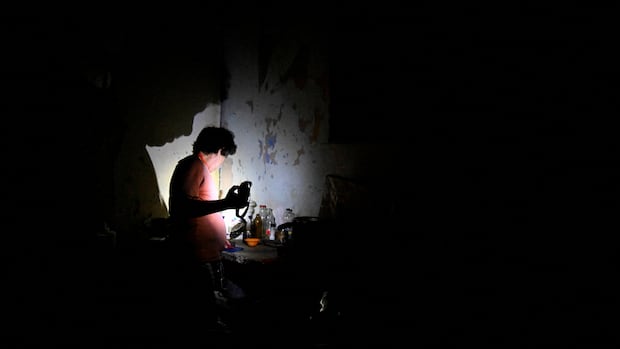
Cuba has reconnected its electrical grid across much of the country, the Energy and Mines Ministry said early on Tuesday, just hours after U.S. President Donald Trump escalated his rhetoric against the communist-run island, saying he could do anything he wanted with Cuba.
Cuba’s national electric grid collapsed on Monday, leaving about 10 million people without power amid a U.S.-imposed oil blockade that has crippled the island’s already obsolete generation system.
Energy officials said they had reconnected the grid from the westernmost Pinar del Rio province to Holguin, near the eastern tip of the island. Santiago de Cuba, the country’s second-largest city, remained offline, reports said.

Millions in Cuba have been left without power after the national energy grid collapsed on Monday. Cuba’s energy infrastructure was already aging, but U.S. threats to tariff nations supplying Cuba with oil has worsened the crisis.
Electricity generation, hampered by fuel shortages and antiquated power plants, remains sharply depressed across the island despite grid recovery efforts, providing scarce relief for Cubans who have already faced months of blackouts.
Most Cubans, including those in the capital of Havana, were seeing 16 or more blackout hours a day, even before the latest grid collapse, testing the patience of residents accustomed to hardship.
“It affects every aspect of our lives,” said Havana resident Carlos Montes de Oca, who said the outages had thrown simple necessities such as food and water into disarray.
“All we can do is sit, wait, read a book,” he said. “Otherwise, the stress gets to you.”
Cuba has yet to say what caused Monday’s nationwide grid failure, the first such collapse since the United States cut off Cuba’s oil supply from Venezuela and threatened to slap tariffs on countries that supply the country with fuel.
Cuba and the United States have opened talks aimed at defusing the crisis. Neither side has provided details of the ongoing negotiations, though Trump has portrayed Cuba as desperate to make a deal.
Trump and Secretary of State Marco Rubio both said on Tuesday that the administration sees the island nation as the next country where the U.S. can expand its influence.

Calling Cuba a ‘failed nation’ with a ‘nice landscape,’ U.S. President Donald Trump said Monday that he thinks he will have the ‘honour’ of taking Cuba, adding he could do anything he wants with it.
“Cuba right now is in very bad shape,” Trump said. “And we’ll be doing something with Cuba very soon.”
This comes after Trump said Monday that he might soon have the “honour of taking Cuba.”
He had previously said Cuba may be subject to a “friendly takeover,” but then said, “it may not be a friendly takeover.” He also said, “We’re talking to Cuba, but we’re going to do Iran before Cuba.”
Marianela Alvarez, a 50-year-old state worker, was taken aback by Trump’s suggestion on Monday that he could “do anything I want with Cuba.”
“I wish Trump would understand, he should leave us in peace,” Alvarez said.

Luis Enrique Garcia, 55, said dialogue was most important.
He cited the example of Venezuela’s acting president, Delcy Rodríguez, who has largely co-operated with the Americans since Maduro’s ouster.
“She said, ‘I don’t want war in my country, let’s have dialogue,’ ” Garcia said.
Amed Echenique, 26, expressed support for bilateral talks, but also said, “I don’t trust Trump as a person.”
Like many Cubans, Barbara Rodriguez, 58, placed the blame for Cuba’s dire situation squarely on the Americans. Since the 1960s, Washington has maintained the most severe and longest-running bilateral economic sanctions against Cuba in the world.
“We are tired of the blockade that has been imposed on us for 60-odd years. And now the blockade is intensifying with the issue of fuel; they aren’t letting any ships into Cuba with fuel,” Rodriguez said. “No one can develop like this.”
Much of Cuba was overcast on Monday morning as a cold front neared the island, casting shadows on the solar parks that account for a third or more of daytime generation.
Cuba has received only two small vessels carrying oil imports this year, according to LSEG ship tracking data seen by Reuters on Monday.
Monday’s grid collapse overshadowed Cuba’s invitation to Cuban Americans and other exiles living abroad to invest in and own businesses on the island, in an apparent gesture of goodwill amid the talks.

Pedro Rámos, a 75-year-old retired mechanic who lives with his wife in a modest apartment in Old Havana, was boiling three pieces of chicken in an attempt to save them from spoiling with the power out.
“I want to see if we can rescue some food,” he said. “Two people older than 70 live here … This is terrible.”
“The power outages are driving me crazy,” said 48-year-old Dalba Obiedo. “Last night, I fell down a 27-step staircase. Now I have to have surgery on my jaw. I fell because the lights went out.”
Havana resident Tomás David Velázquez Felipe, 61, said the relentless outages make him think that Cubans who can leave the island should just pack up and go.
“What little we have to eat spoils,” he said. “Our people are too old to keep suffering.”