Physical Address
304 North Cardinal St.
Dorchester Center, MA 02124
Physical Address
304 North Cardinal St.
Dorchester Center, MA 02124

Ukraine halted Russian gas supplies to European customers through its pipeline network on Wednesday after a pre-war transit agreement expired late last year.
Ukraine’s energy minister, Herman Halushchenko, confirmed on Wednesday morning that Kiev had stopped the transit “in the interest of national security”.
“This is a historic event. Russia loses markets and will incur financial losses. Europe has already decided to phase out Russian gas, and (this) connects to something Ukraine has done today,” Halushchenko said in an update on the Telegram messaging app.
At a summit in Brussels last month, Ukrainian President Volodymyr Zelenskyy vowed that Kiev would not allow Moscow to use the transits to earn “extra billions … on our blood, on the lives of our citizens.” But he briefly held open the possibility that the gas flows would continue if payments to Russia were withheld until the war ends.
Russia’s Gazprom said in a statement on Wednesday morning that it “does not have the technical and legal ability” to send gas through Ukraine, due to Kiev’s refusal to extend the deal.
Even as Russian troops and tanks moved into Ukraine in 2022, Russian natural gas continued to flow to Europe through the country’s pipeline network – established when Ukraine and Russia were both part of the Soviet Union – under a five-year agreement . Gazprom earned money from the gas and Ukraine collected transit fees.
Before the war, Russia supplied almost 40% of the European Union’s pipeline natural gas. Gas flowed through four pipeline systems, one under the Baltic Sea, one through Belarus and Poland, one through Ukraine and one under the Black Sea through Turkey to Bulgaria.
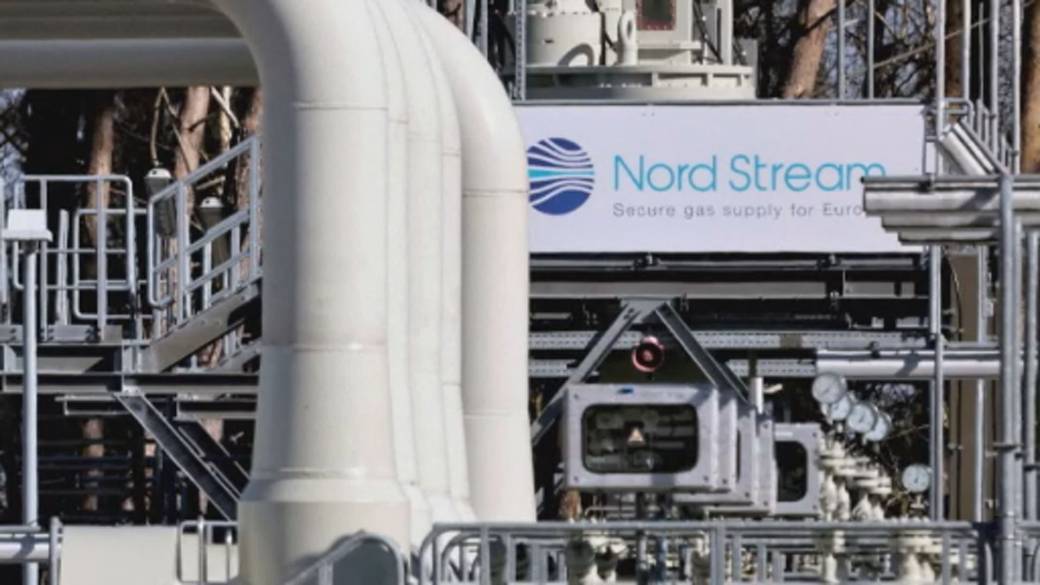
After the war began, Russia cut off most supplies through the Baltic and Belarus-Poland pipelines, citing disputes over a demand for payment in rubles. The Baltic pipeline was blown up in an act of sabotage, but details of the attack remain murky.
The Russian cutoff caused an energy crisis in Europe. Germany had to spend billions of euros to set up floating terminals to import liquid natural gas that comes by ship, not by pipeline. Users cut back when prices rose. Norway and the USA filled the gap, becoming the two largest suppliers.
Europe saw the Russian cut as energy manipulation and has outlined plans to completely eliminate Russian gas imports by 2027.

For news that affects Canada and around the world, sign up for breaking news alerts delivered directly to you as they happen.
Russia’s share of the EU’s pipeline natural gas market fell sharply to around 8% in 2023, according to data from the EU Commission. The Ukrainian transit route served EU members Austria and Slovakia, which have long received most of their natural gas from Russia but have recently sought to diversify supplies.
Gazprom halted supplies to Austria’s OMV in mid-November over a contractual dispute, but gas flows through Ukraine’s pipelines continued as other customers stepped in. a pipeline from Poland.
Among the hardest hit will be EU candidate country Moldova, which received Russian gas via Ukraine and has introduced emergency measures as residents brace for a harsh winter and impending power outages.
Apart from Kiev’s decision to let the transit agreement expire, Gazprom said last month that it will stop gas supplies to Moldova from January 1, citing unpaid debts. Gazprom has said Moldova owes nearly $709 million for past gas supplies, a figure the country has hotly disputed, citing international audits.
Heating and hot water supplies were abruptly cut off on Wednesday to households in Transnistria, Moldova’s missing region that has hosted Russian troops for decades, as Russian natural gas stopped flowing to the territory, local transit operator Tiraspoltransgaz-Transnistria said.
In an online statement, the company urged residents to gather household members together in one room, hang blankets over windows and balcony doors and use electric heaters. It said some key facilities, including hospitals, were exempt from cuts.
On December 13, Moldova’s parliament voted to impose a state of emergency in the energy sector as fears emerged that gas shortages could trigger a humanitarian crisis in Transnistria, which has depended on Russian energy supplies for decades.
Many observers have predicted that the looming energy shortage could force people in the separatist territory to travel to Moldova in search of basic supplies to get through the harsh winter and put further strain on resources.
Moldova, Ukraine and EU politicians have repeatedly accused Moscow of weaponizing energy supplies.
On Wednesday, Polish Foreign Minister Radek Sikorski called Ukraine’s move to halt the supplies a “victory” for those opposed to the Kremlin’s policies. In a post on X, Sikorski accused Moscow of systematically trying to “blackmail Eastern Europe with the threat of cutting off gas supplies,” including through a Baltic pipeline that bypasses Ukraine and Poland and runs directly to Germany.
The Prime Minister of Slovakia Robert Fico The Prime Minister of Slovakia claimed on Wednesday that the end of gas flows through Ukraine “will drastically affect all of us in the EU, but not Russia.”
Fico, whose views on Russia diverge sharply from the European mainstream, has previously hit out at Kiev’s refusal to extend the transit agreement, threatening to cut electricity supplies to Ukraine in response.
Moscow can still send gas to Hungary, as well as non-EU states Turkey and Serbia, via the TurkStream pipeline across the Black Sea.
The steady reduction of Russian gas supplies to European countries has also encouraged them to speed up the integration of Ukraine’s energy grids with its neighbors to the west.
Last week, private Ukrainian energy company DTEK said it had received its first shipment of liquefied natural gas from the US, delivering it through a newly expanded network spanning six countries from Greece to Ukraine – marking a major step in reducing regional dependence of Russian energy.
Separately, overnight on New Year’s Day, Russia launched a drone strike on Kiev that left two people dead under the rubble of a damaged building, according to the city government. At least six people were injured across the Ukrainian capital, according to Mayor Vitali Klitschko.
Russian shelling also killed a man and wounded two women in Ukraine’s southern city of Kherson, regional authorities reported.